|
The order Ericales consists of 25 families with approximately 9450 species; however, species in only three families (Ericaceae, Epacridaceae, and Empetraceae) usually possess typical ericoid mycorrhizas. Recent molecular studies have placed the Epacridaceae and Empetraceae in the family Ericaceae. Many ericaceous families including Clethraceae, Grubbiaceae, and Cyrillaceae have been poorly studied. Overall, the mycorrhizal status of many species in the order Ericales remains undescribed.
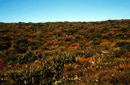
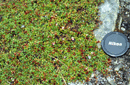
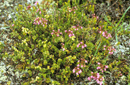
Although ericoid mycorrhizas are confined to the order Ericales, species in two main families, Ericaceae and Epacridaceae, contribute significantly to ecosystems in the Northern and Southern hemisphere, respectively. In the Northern hemisphere, ericaceous species with typical ericoid mycorrhizas often dominate heathlands; they are also well represented in the sub-alpine and alpine floras of both Europe and North America. Acidic heathlands and sandplains in the Southern hemisphere (notably in Australia) are often dominated by species in the family Epacridaceae.
The immense diversity within the order Ericales and its worldwide distribution make characterizing plants with ericoid mycorrhizas very difficult. In general terms, these plants are often perennial shrubs or small trees with sclerophyllous (i.e. highly lignified) leaves.
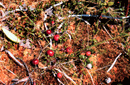
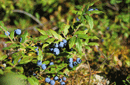
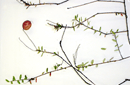
Species of Vaccinium (the blueberries and cranberries) are grown for their fruit and have become important commercial crops.
|