|
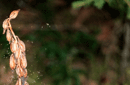
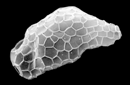
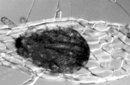
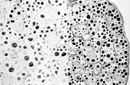
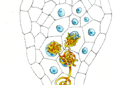
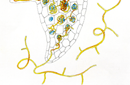
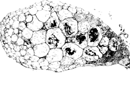
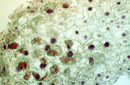
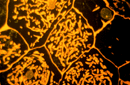
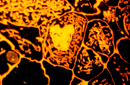
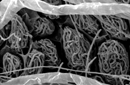
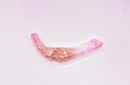
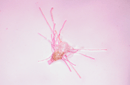
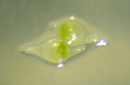
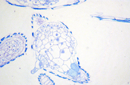
All orchid species form numerous minute seeds per capsule which, because of their small size, are referred to as "dust seeds". Each seed contains a minute undifferentiated embryo lacking a root and shoot apical meristem. In addition, the embryo cells store lipids and proteins since endosperm is not present. These unique structural characteristics require that seeds must first become colonized by an appropriate fungal species; in turn, the fungus provides necessary carbohydrates for the further development of the embryo into a structure called a protocorm. The protocorm is composed of parenchyma cells, some of which eventually initiate a shoot apical meristem. The first adventitious root primordium is initiated after the first leaf primordium forms from the shoot apical meristem. Since the protocorm and the seedling that develops from it often remain below ground for more than one growing season, this phase of the life cycle is myco-heterotrophic.
|