|
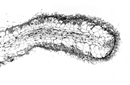
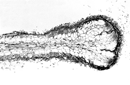
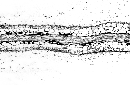
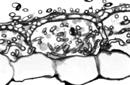
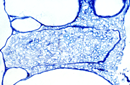
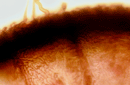
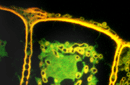
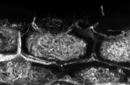
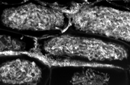
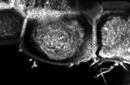
Depending on the fungal species, the mantle in both Arbutus and Arctostaphylos, can be either compact and several cell layers thick, or loosely organized with only a few cell layers. A mantle is present around all stages of root cluster formation. Rhizomorphs, when present, extend from the mantle surface into the substrate. Hartig net formation occurs only around epidermal cells, resulting in a paraepidermal Hartig net. Hartig net hyphae may branch, penetrate the walls of adjacent epidermal cells, and develop further as branched intracellular hyphae. The confinement of Hartig net hyphae to the epidermis may be the result of the suberization of the walls of the outer layer of cortical cells. Intracellular hyphae can occupy most of the epidermal cell volume.
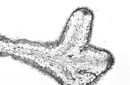
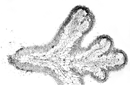
Pyrola mycorrhizas described to date have loosely organized, thin mantles, a paraepidermal Hartig net that is usually one cell wide, and intracellular hyphae that may fill most of the volume of epidermal cells.
|