|
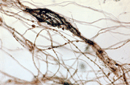
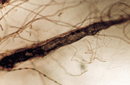
The identity of DSEs and other dark septate root endophytes has been problematic because most isolates obtained from roots remain sterile when grown in culture. A few isolates have formed conidia and spores in culture, and these, along with other features of the cultured mycelium, can be useful in species identification. More recently, molecular techniques have been used to identify some of these root endophytes. Although it is certain that there are many unidentified DSE fungi and other root endophytes, five main species (Chloridium paucisporum, Leptodontidium orchidicola, Phialocephala dimorphospora, Phialocephala fortinii, and Phialophora finlandia) have been identified from a number of plant species.
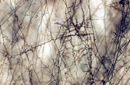
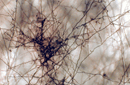
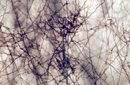
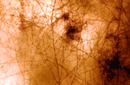
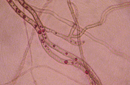
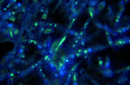
Phialocephala fortinii has been studied extensively in axenic culture. Cultures are darkly pigmented, and the septate hyphae change from being thin-walled and hyaline to thick-walled and melanized. Hyphae often have pigmented exudates on their surface as well as protrusions of wall material, forming prominent "bumps". Coiled hyphae, hyphal strands, and sclerotia-like structures often develop in culture.
|