Dark Septate Associations: Root Colonization

Introduction | Table of Contents | Glossary | Help 

Hosts | Fungi | Root Colonization | Main Menu 

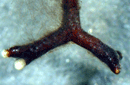
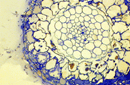
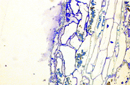
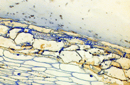
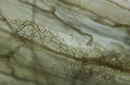
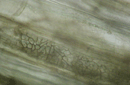
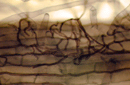
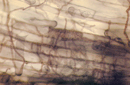
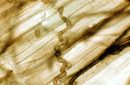
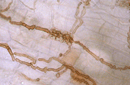
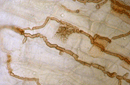
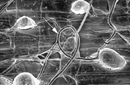
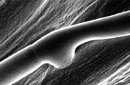
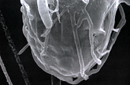
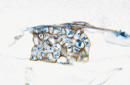
Based on the few studies that have been reported, there appears to be a fairly common pattern of root colonization by dark septate endophytes. Fungal hyphae contact the root surface and frequently form a network of mycelium over the surface and within the root. Hyphae enter the root through root hairs, through epidermal cells, or through wounds caused by the emergence of lateral roots. Once inside the root, hyphae proliferate and invade epidermal and cortical cells. Invasion of vascular tissues may occur. Melanized hyphae form microsclerotia (compact groups of hyphae) within epidermal and cortical cells. These latter structures can be used as a diagnostic feature of dark septate endophytes in field-collected material because of their prevalence. Microsclerotia contain polysaccharides, proteins, and polyphosphates, strengthening the view that these may be perennating bodies, allowing the fungus to survive in older roots in the soil, and acting as inoculum for colonization of new roots.

Pinus banksiana

Pinus banksiana

Pinus banksiana

Pinus banksiana

Pinus banksiana

Pinus banksiana

Pinus banksiana

Pinus banksiana

Pinus banksiana

Pinus banksiana

Pinus strobus

Pinus strobus

Pinus strobus

Pinus strobus

Pinus strobus

Pinus strobus

Populus tremuloides

Populus tremuloides

Populus tremuloides

Populus tremuloides

Populus tremuloides

Populus tremuloides

Daucus carota

Daucus carota

Daucus carota

Daucus carota

Daucus carota

Daucus carota

Triadenum fraseri

Triadenum fraseri

Triadenum fraseri

Triadenum fraseri

Asparagus officinalis

Asparagus officinalis

Asparagus officinalis

Asparagus officinalis

Vaccinium sp.

Vaccinium sp.

Asparagus officinalis

Asparagus officinalis

Asparagus officinalis

Asparagus officinalis

Asparagus officinalis

Asparagus officinalis

Asparagus officinalis

Asparagus officinalis

-

-

Click on a thumbnail to view a larger image

Previous  |   Next   

Return to Top