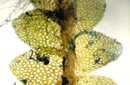
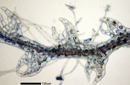
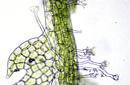
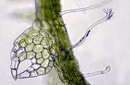
The leafy liverworts are so-named because the gametophyte is more complex, consisting of branched, short, upright axes (stems) with very simple leaves. Rhizoids attach the gametophytes to the substrate. Approximately 4000 of the 6000 species of liverworts worldwide belong to this category. Although they are particularly abundant in the tropics and sub-tropics, they have an extensive distribution. Leafy liverworts are associated with either ascomycete or basidiomycete fungi.
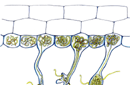
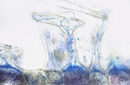
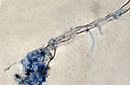
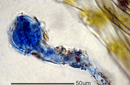
Species within six families in the order Jungermanniales (Pseudolepicolenceae, Lepidoziaceae, Calypogejaceae, Adelanthaceae, Cephaloziaceae, Cephaloziellaceae) of leafy liverworts that associate with ascomycete fungi show a unique colonization pattern. Fungal hyphae occupy swollen rhizoid tips from which some hyphae emanate into the substrate. The mycobiont involved is likely the most common fungal species (Hymenoscyphus ericae, recently renamed Rhizoscyphus ericae) that forms typical ericoid mycorrhizas with many species in the family Ericaceae.
|