|
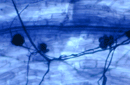
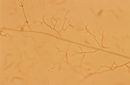
The extraradical mycelium has several functions, the most important of which is the uptake and translocation of mineral nutrients such as phosphorus from the soil solution to roots. The highly branched nature of the absorbing hyphae increases the surface area for nutrient uptake. Hyphal growth beyond the depletion zone at the root surface extends the region from which nutrients and water can be absorbed. Hyphal bridges, known to occur between roots of adjacent plants, can act as a mechanism for the transfer of nutrients between hosts. The transfer of phosphate and carbon compounds is currently of considerable interest in terms of competition among plants.
The extraradical mycelium is also a source of inoculum for new roots. When the mycelium network is disturbed, either under laboratory or field conditions, there is a delay in colonization of new roots. The extraradical mycelium aids in soil stabilization; soil particles adhere to the surface of hyphae because of the production of a glycoprotein, glomalin. This process is important in the stabilization of sand dunes, soil in disturbed sites, and is likely important in maintaining soil texture. Other functions of the extraradical mycelium include its use as a food source for numerous soil organisms, and its role in the formation of asexual spores or auxiliary cells in some genera that are important sources of inoculum for dispersal of the fungus.
|