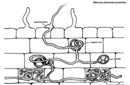
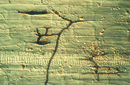
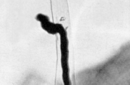
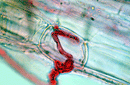
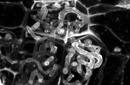
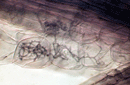
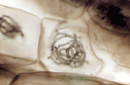
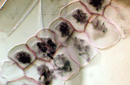
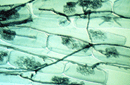
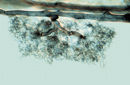
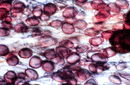
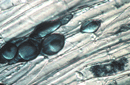
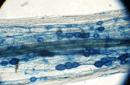
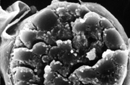
Colonization: All arbuscular mycorrhizal fungal species are obligate biotrophs, depending entirely on host plants for carbon compounds. The formation of arbuscular mycorrhizas involves a series of steps from recognition of the root surface by the fungus, the formation of an appressorium, epidermal cell penetration, intraradical hyphal and arbuscular development, and in some cases the formation of vesicles.
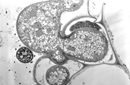
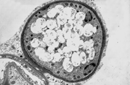
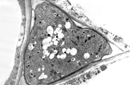
In the Arum-type arbuscular mycorrhiza, a hypha that penetrates the epidermis generally forms a coil, either in an epidermal cell or first cortical cell layer, before it enters the intercellular space system of the cortex. In this type, roots can become rapidly colonized along the root axis, owing to the free movement of hyphae in the intercellular spaces. Branches from intercellular hyphae breach the cell wall of cortical cells and branch repeatedly to form arbuscules. Intercellular or intracellular vesicles may form.
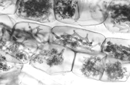
In the Paris-type arbuscular mycorrhiza, the intraradical hyphae pass from cell to cell, forming complex coils in both epidermal and cortical cells. Small hyphal branches develop from some of these coils to form arbuscules (sometimes called arbusculate coils). Vesicles may develop as well.
|