|
Fungal species involved:
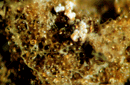
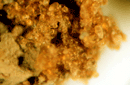
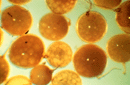
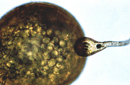
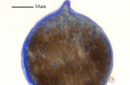
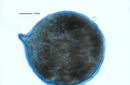
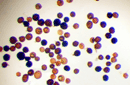
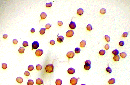
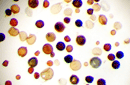
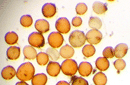
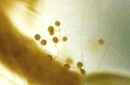
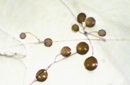
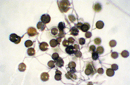
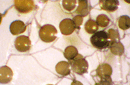
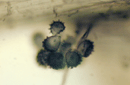
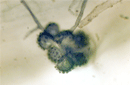
The fungi involved are ubiquitous soil-borne organisms (phylum Glomeromycota, Class Glomeromycetes) belonging to four orders: Archaeosporales, Paraglomerales, Diversisporales and Glomerales. Eight genera of arbuscular mycorrhizal fungi have been recognized based mainly on morphological characteristics of asexual spores, including colour, size and shape, surface texture, number of wall layers, and details of the subtending hypha. Recently, molecular methods and various biochemical parameters are now being used in systematic studies. These genera, Glomus, Paraglomus, Sclerocystis, Scutellospora, Gigaspora, Acaulospora, Archaeospora, and Entrophospora, include approximately 200 species. Species delineation remains uncertain and continues to change as more isolates are examined and as the use of molecular techniques increases. A major challenge in the systematics of this group of fungi is the considerable variation within isolates of defined species and the lack of sexual reproductive structures.
|