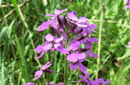
Although the majority of vascular plants are associated with mycorrhizal fungi, a few taxa are described as being ‘nonmycorrhizal’. Less than 5% of all vascular plant species are nonmycorrhizal. Genera in three families (Brassicaceae, Chenopodiaceae, and Proteaceae) have received the most attention because they typically fail to form mycorrhizas under natural conditions. Two of these families include some economically important crop species. Examples of these within the Brassicaceae are canola (Brassica napus) and vegetables such as broccoli, cabbage, etc. In the Chenopodiaceae, sugar beets (Beta vulgaris) and quinoa (Chenopodium quinoa), an important traditional food in the high Andes, are examples.
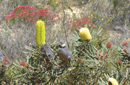
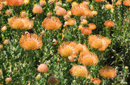
Members of the Proteaceae are of interest in that they develop highly branched root systems referred to as "cluster roots" that are important in nutrient uptake and that seem to have replaced mycorrhizal fungi for this function.
Other plants such as lupins (Lupinus spp.) and many sedges and rushes are also usually nonmycorrhizal or have very low colonization levels. Reports that some genera are typically nonmycorrhizal must be viewed with caution because often few samples have been examined.
The mechanisms by which plants exclude mycorrhizal fungi from their roots are controversial. They may involve lack of recognition signals between the symbionts, modifications of root cell walls, and(or) the presence of fungitoxic chemicals.
|