|
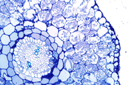
Cistoid mycorrhizas are a distinct group of mycorrhizas found in several angiosperm genera, i.e., (Cistus, Fumana, Helianthemum, Hudsonia, Lechia, and Tuberaria) in the family Cistaceae (order Malvales). They usually share many of the attributes of ectomycorrhizas, including the development of a mantle, and cortical Hartig net. The pattern of colonization appears to depend, however, on the culture conditions under which plants are grown. For example, field collected mycorrhizas of Helianthemum almeriense have intracellular hyphae in addition to a mantle and Hartig net, whereas mycorrhizas formed in vitro have structural characteristics typical of ectomycorrhizas. There is some evidence that arbuscular mycorrhiza may occur in seedlings of Helianthemum but that these are replaced in older plants by ectomycorrhizal associations. Fungal species reported to form mycorrhizas with Helianthemum include the Ascomycetes, Terfezia claveryi (the desert truffle), Picoa lefebvre, Tuber melanosporum and Cenococcum geophilum. Several Basidiomycetes (Laccaria laccata, Lactarius tesquorum, Boletus edulis) and the Ascomycete Tuber nigrum have been reported to associate with Cistus.
|