|
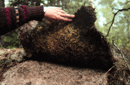
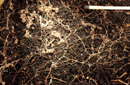
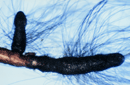
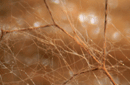
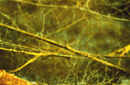
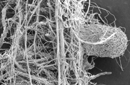
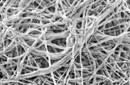
Hyphae that develop from the outer mantle into the surrounding soil are referred to as extraradical ( = extramatrical) mycelium. The extraradical mycelium can be an extensive network consisting of mycelial fans that permeate the soil and that may interconnect roots of the same plant and(or) adjacent plants. Hyphae comprising the mycelium network are of various diameter. As extraradical hyphae develop, they may adhere to and surround soil particles, or soil particles may adhere to the length of individual hyphae or groups of hyphae. Extraradical hyphae of some fungi grow around and into colonies of bacteria, excrement of earthworms, pollen, and organic debris in the soil; some are able to penetrate rock. Some fungi, particularly in the genera Hysterangium and Gautieria, form "mats" of mycelium that bind soil and fine roots, forming a significant portion of the biomass of some forest soils. This mycelium may be encrusted with calcium oxalate crystals.
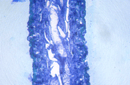
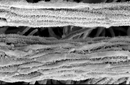
Many ectomycorrhizal fungal species form complexes of hyphae (rhizomorphs or hyphal strands) as part of the extraradical mycelium. Each rhizomorph (strand) consists of a variable number of individual hyphae that interconnect with each other by different mechanisms. One or more central hyphae (vessel hyphae) may be enlarged and may have modified septa that allow for rapid movement of water and nutrient minerals.
|