|
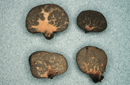
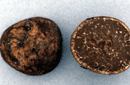
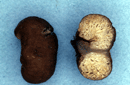
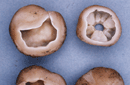
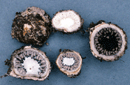
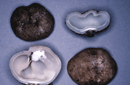
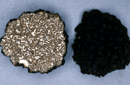
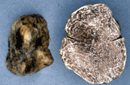
The majority of fungal species involved in the ectomycorrhizal symbiosis belong to families in the Basidiomycota (basidiomycetes), with a few species belonging to the Ascomycota (ascomycetes). Approximately 5500 species of fungi are able to form ectomycorrhizas, many of which have not been studied. About 80% of these are epigeous, having reproductive structures occurring above ground; fewer species are hypogeous, producing reproductive structures that remain underground. Whereas basidiospores and ascospores of epigeous species are usually disseminated by wind, spores of hypogeous fungi are frequently spread through the feces of animals that consume fungi.
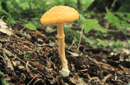
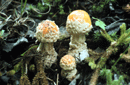
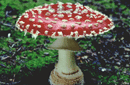
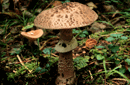
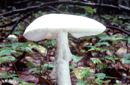
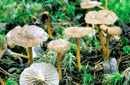
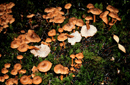
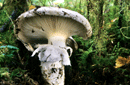
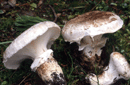
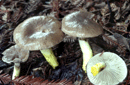
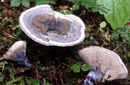
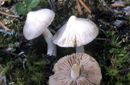
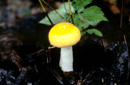
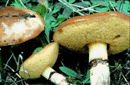
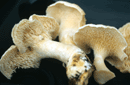
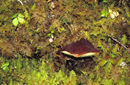
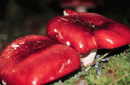
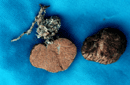
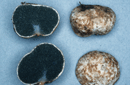
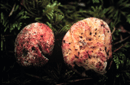
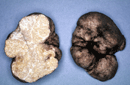
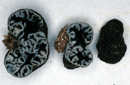
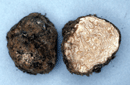
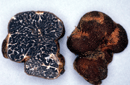
The diversity in epigeous species is immense and many of the "mushrooms" found associated with trees are the reproductive structures of ectomycorrhizal fungi. Hypogeous species, including the truffles, are not as easily detected and more challenging to locate. Both epigeous and hypogeous reproductive structures are often used as indicators of the fungal species present on neighbouring tree roots. However, with increasing use of molecular techniques, it is now apparent that the diversity of fungi on roots is far greater than the populations of reproductive structures observed.
|