|
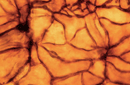
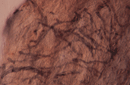
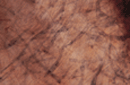
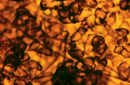
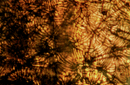
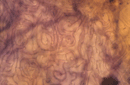
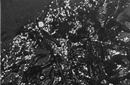
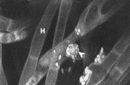
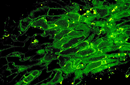
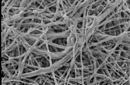
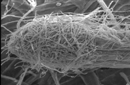
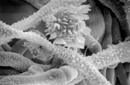
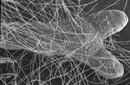
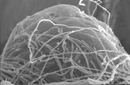
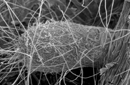
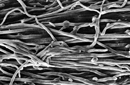
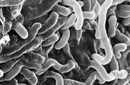
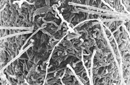
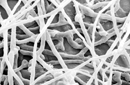
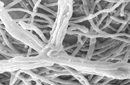
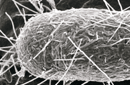
The mantle occupies a unique position in that it interfaces with the root (inner mantle) and the soil (outer mantle). For this reason it has been studied from various perspectives, including its use in the identification of fungal symbionts (morphotyping), its interaction with other soil micro-organisms, and its role in the movement of water and mineral nutrients from the soil solution to the root. Characteristics of the mantle can be described at various levels, ranging from features visible to the eye, features evident using various types of light and fluorescence microscopy, as well as detailed features using laser scanning confocal microscopy, scanning electron microscopy, and transmission electron microscopy.
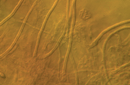
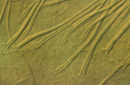
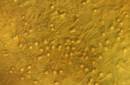
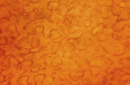
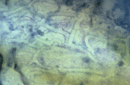
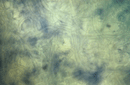
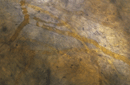
To identify the fungal component of ectomycorrhizas, one can use mantle colour and surface features such as whether the mantle is smooth, warty, cottony, or spiny. Characteristics including the spatial organization and form of the outer mantle, the presence of calcium oxalate crystals, and cystidia can be determined. The arrangement of hyphal cells in the various layers of the mantle can be determined by preparing peels, clearings, or paradermal sections.
|